What Is an Editorial Style Guide?
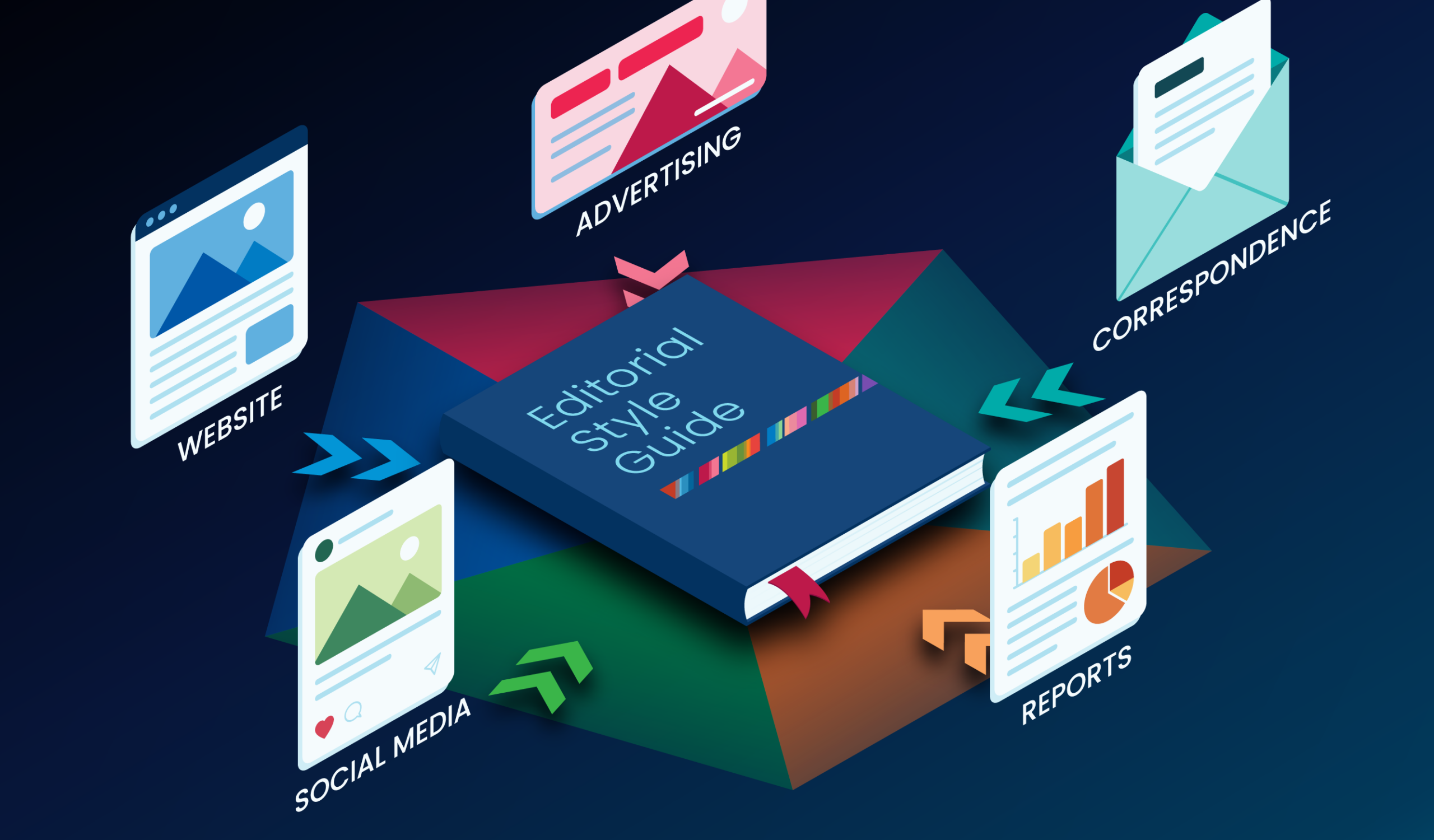
An editorial style guide is an internal resource that aligns your marketing team—and anyone who creates content on behalf of your organization—around a shared voice, tone, and set of editorial standards. It ensures that every piece of content, from ads and infographics to emails and blog posts, sounds distinctly like your brand.
The result? Greater audience trust, a more seamless content experience, and less time spent on editing and onboarding.
Why You Need One
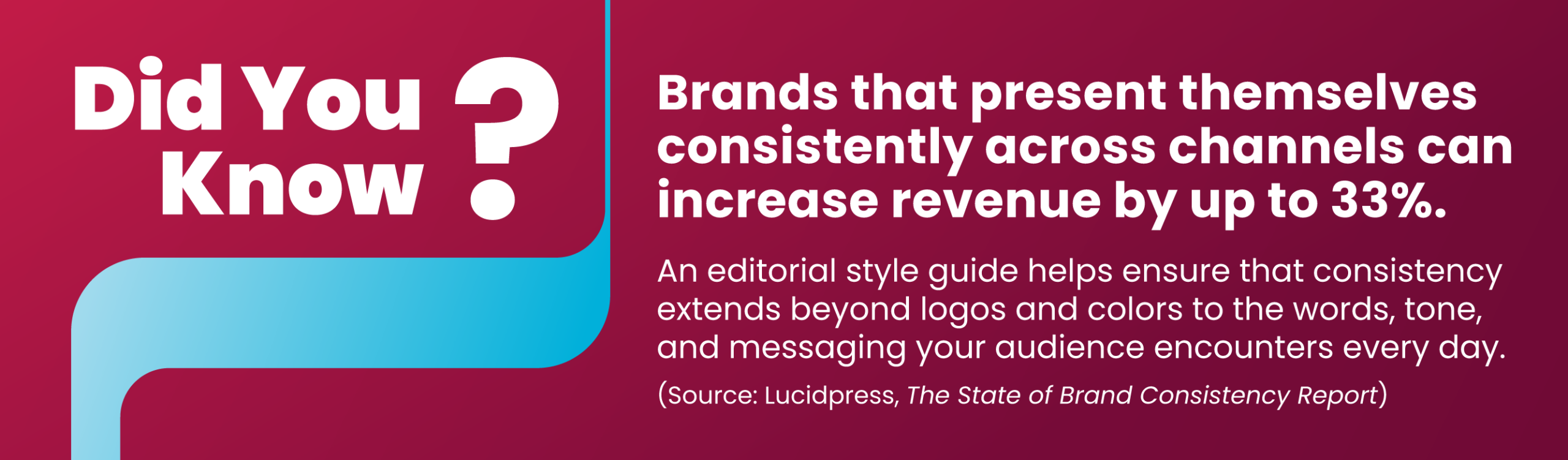
- Brand Consistency: An editorial style guide keeps your messaging cohesive across every touchpoint, making your brand instantly recognizable and preventing your communications from feeling fragmented or inconsistent.
- Time Savings: Clear guidelines eliminate guesswork for in-house teams and external contributors alike. Writers spend less time revising content to match preferences, and editors spend less time correcting avoidable inconsistencies.
- Professionalism & Audience Trust: Establishing standards for grammar, terminology, and formatting helps prevent embarrassing errors and conflicting messaging. Consistency signals professionalism, strengthens your credibility, and builds trust with your audience. (For more on why grammar still matters, read this blog post.)
- Clear, Practical Guidance: A style guide provides definitive answers to common editorial questions, from capitalization and hyphenation to product naming conventions and inclusive language practices.
Key Elements to Include
1. Brand Voice & Tone
Define how your brand communicates. Are you conversational and witty, or clinical and authoritative? Should content be written in the first, second, or third person? Establishing these expectations helps ensure your content sounds authentic and consistent, regardless of who writes it.
2. Grammar & Mechanics
Identify the style authority your organization follows—such as the AP Stylebook or Chicago Manual of Style—and document any company-specific exceptions or industry preferences.
Be sure to address common areas of inconsistency, including:
- Abbreviations: Which words can be abbreviated, and how should they be formatted? Should acronyms be spelled out on first reference with the abbreviation in parentheses and used alone thereafter? Are certain abbreviations widely recognized enough to stand on their own—for example, “U.S.”? (Or is it “US”?)
- Capitalization: Establish rules for capitalizing job titles, department names, product names, and other nouns.
- Dashes: Include guidance on when to use hyphens, en dashes, and em dashes.
- Numbers: Determine which numbers should be spelled out and which should appear as numerals. A common approach is to spell out one through nine and use numerals for 10 and above. Consider whether these rules vary by medium and outline your preferences for dates and measurements.
- The Oxford Comma: Few editorial topics inspire stronger opinions. Decide whether your organization will use the Oxford (or serial) comma and apply the rule consistently. Many organizations favor it because it helps eliminate ambiguity. (In case you couldn’t tell, we’re firmly in the Oxford comma camp.)
3. Glossary & Jargon
Create a reference list of approved company terminology, product names, industry-specific language, and words or phrases to avoid. This ensures consistency and helps reinforce your brand identity.
4. Formatting Standards
Document preferences for dates, numbers, bullet points, headings, hyperlinks, and other formatting conventions to maintain consistency across long-form and short-form content alike.
Keep It Current
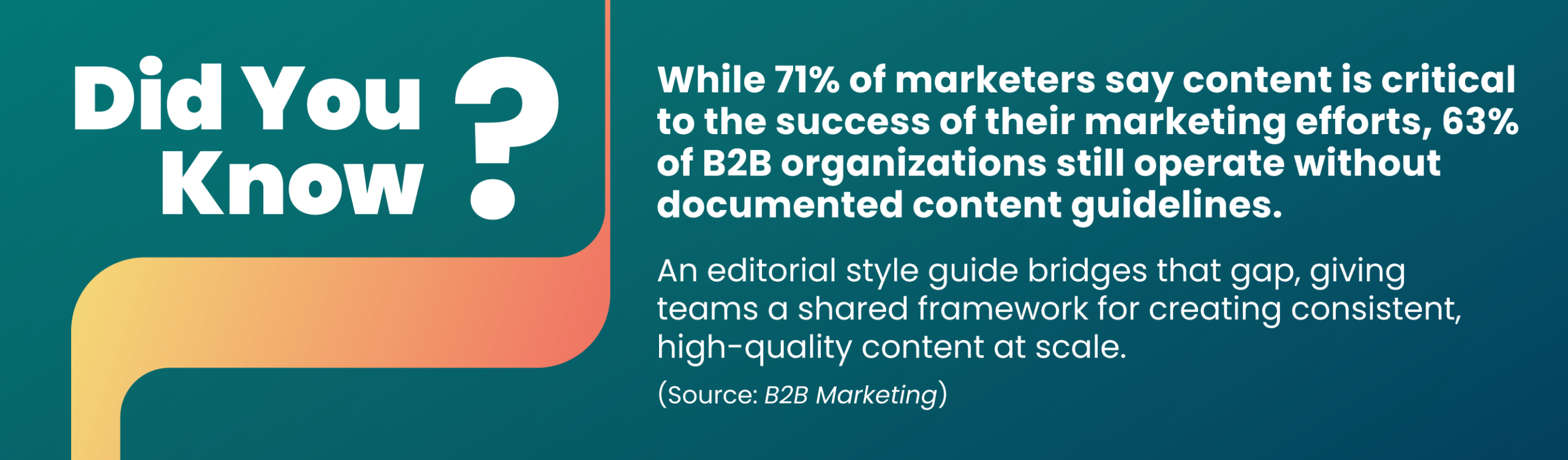
To be truly effective, your editorial style guide should be easy to access and regularly referenced. When questions arise about word choice, tone, or editorial preferences, it should serve as the go-to resource. The more people who use it, the more valuable it becomes.
Encourage team members to suggest updates, additions, and refinements so the guide reflects both the realities of your organization and the unique voice of your brand. Language evolves constantly, and your style guide should evolve with it—adapting not only to changes within your organization but also to the world around it.